
A featured contribution from Leadership Perspectives: a curated forum reserved for leaders nominated by our subscribers and vetted by the Manage HR Advisory Board.

HIGHSERVICE CORP
Redefining Sustainable Mining from the People Perspective
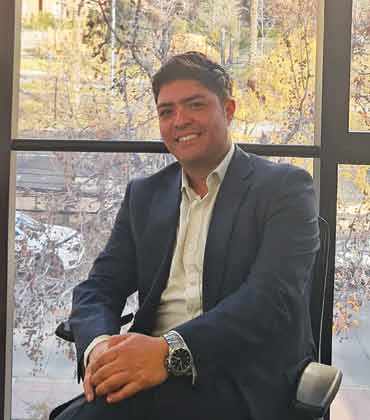
Patricio Izquierdo Araya
Patricio Izquierdo Araya is the Deputy Manager of Compensation, Quality of Life, and Labor Relations at HIGHSERVICE CORP. Headquartered in Chile and with a global presence, it is a prominent mining services holding company that diversifies across engineering and construction, as well as the design, development and implementation of robotic solutions and cutting-edge technologies applied to mining. He reflects on the strategic role that people management plays in the sector’s evolution toward a fairer, more human and sustainable future.
Amid growing environmental and social awareness, mining—one of Chile’s economic pillars—faces a challenge as crucial as it is silent: sustainability from the human perspective.
Sustainability from the Compensation Perspective
It is important to talk about sustainability from the compensation perspective because this is where many of the decisions that directly affect people’s quality of life are anchored. Sustainability is not only an environmental or technical matter. It is also a promise of well-being and permanence, and that begins with a fair work ecosystem. Fair compensation is not just a number but a symbol of recognition, equity and commitment. Without it, any discourse on sustainability is incomplete.
Achieving fair compensation in a comprehensive way requires integrated, joint and cohesive work with the talent management area, triangulating technical recognition, well-being, compensation and the management of behavioral competencies.
The Human Dimension of Sustainability
I believe an understanding of the human dimension of sustainability is in progress in the mining industry. Historically, mining has been driven by a rigid logic of operational efficiency, where the human factor was often subordinated to technical performance. But that has changed.
Today, we see in our clients, who are major mining producers in Chile and worldwide, a growing sensitivity, at least in discourse, regarding the worker’s experience, mental health, rest periods and professional development. They are incorporating concepts such as inclusion, diversity, gender diversity and work-life balance. The key challenge now is how to transform that sensitivity into tangible, coherent policies, particularly within compensation structures.
Defining a Sustainable Compensation Policy
First, a sustainable compensation policy has to have the ability to adapt to different stages of professional life. We cannot continue operating with rigid frameworks that assume all workers have the same needs. Sustainability also involves flexibility: modular benefits, hybrid work schemes where possible and access to wellness programs that go beyond the basics.
“Talking about sustainability in mining without considering human capital is a structural omission”
Second, it needs transparency. Today, any compensation structure perceived as opaque or arbitrary erodes organizational trust. Without trust, no sustainability is possible. A fundamental part of this is the recognition of skills and talent within compensation.
Impact on Talent Attraction and Retention
The new generation of mining workers is not only looking for a good salary. They are looking for meaning, for coherence, for integral well-being. In an environment as demanding as mining, with long shifts, geographic isolation and high physical and mental demands, the employee value proposition must be solid and evolved. That implies continuous, collaborative work between the compensation area and the talent management area to remain up-to-date, sensitive and creative to jointly develop talent.
Creativity here is in thinking beyond money. Obviously, financial compensation remains important, but symbolic aspects are being increasingly valued, such as recognition, participation and the opportunity to make an impact. Creativity in this context means deeply understanding the lives of those working in mining and designing proposals that engage with business reality and personal life.
Measuring Sustainability through Workplace Climate
Workplace climate is one of the most accurate barometers of internal sustainability. If there is demotivation, high turnover, stress-related leave or persistent conflict, there is no real sustainability, even if financial indicators look positive. This is why the people management function, and particularly compensation, must stop being seen as merely administrative and instead become a strategic partner in the cultural transformation of the industry.
Role of Technology in Sustainable Compensation
Technology can be highly supportive, particularly in process automation, generating traceability, facilitating access to information and supporting decision-making. Yet it cannot replace human judgment. Designing sustainable compensation systems requires sensitivity, knowledge of context and active listening.
Technology is a tool, but it is not the compass. The compass is still ethics: How do I want the people who make my business possible to feel, and what is the broader impact they have across the value chain?
Envisioning the Future of Mining Work
I envision it as more holistic. Organizations need to understand that the most strategic resource is not underground but on the surface: people. We are moving toward a future, where talking about sustainability also means talking about quality of life, purpose and fair labor relations. It may sound idealistic, but I believe it is inevitable. Mining, if it wishes to endure, will have to embrace this human dimension in a profound, structural and permanent way.
The articles from these contributors are based on their personal expertise and viewpoints, and do not necessarily reflect the opinions of their employers or affiliated organizations.

Be first to read the latest tech news, Industry Leader's Insights, and CIO interviews of medium and large enterprises exclusively from Manage HR Magazine
